Real-Time Search Grounding: Architecture & Attribution
The Problem: The Knowledge Cutoff and Hallucination Trap
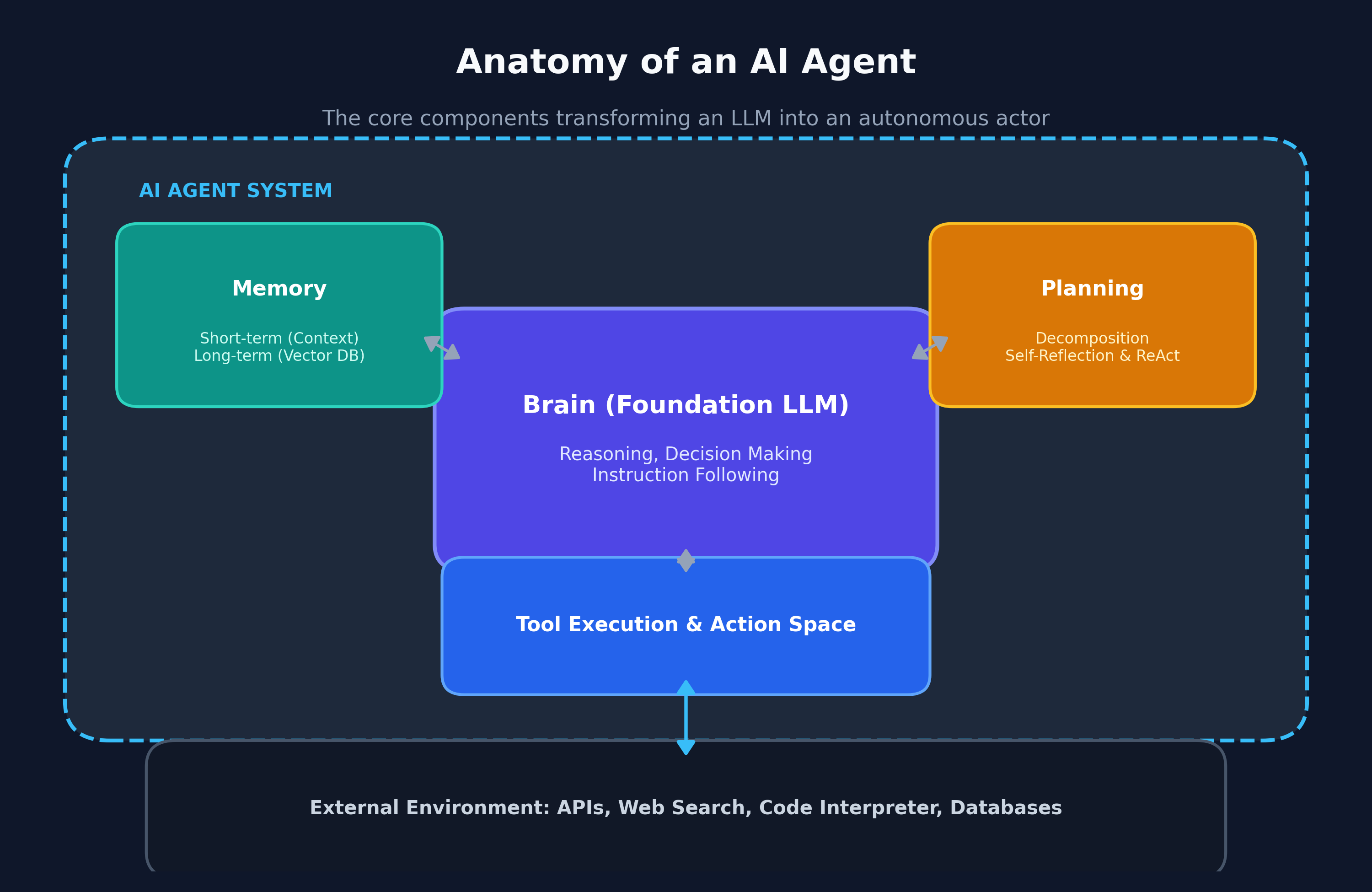
Foundation models excel at complex reasoning, stylistic synthesis, and code generation. However, when enterprise applications rely on models to make decisions based on real-time world events, they encounter the fundamental constraint of parametric memory: the knowledge cutoff.
Because models are trained on historical snapshots of internet data, relying solely on parametric weights produces three severe operational liabilities:
- Temporal Blindness: Models cannot know breaking news, regulatory changes, stock market fluctuations, or software documentation released after their training cutoff date. A prompt asking “What are the new security compliance standards published this morning?” produces confident, hallucinated fabrications.
- Unverifiable Fact Claims: When an ungrounded model makes an assertion, users have no way to verify its provenance. In mission-critical workflows like competitive analysis, legal research, or medical triage, an answer without source links is an unquantifiable liability.
- Internal Vector RAG Blindspots: While internal vector retrieval (RAG) grounds models in proprietary company files, it remains blind to the public web. If a user asks an internal research agent to compare internal metrics against an external competitor’s latest press release, an internal-only vector store yields zero relevant chunks.
The Solution: Real-Time Multi-Engine Search Grounding
To provide models with fresh, verifiable information, production AI architectures deploy Real-Time Search Grounding. Pioneered by search-native AI engines like Perplexity, Google Search Grounding for Gemini, and the Brave Search API, search grounding dynamically fetches live web results, reranks candidate documents, and grounds model responses with verifiable inline citations.
Instead of passing user queries directly to generation, a grounded architecture inserts a retrieval orchestration loop:
- Autonomous Search Query Generation: The model evaluates whether the user prompt requires external world facts. If required, it decomposes the prompt into targeted keyword search queries rather than conversational sentences.
- Multi-Engine Aggregation & Fetching: Queries are dispatched in parallel to high-freshness search APIs (e.g., Google Search, Brave Search, Bing, or specialized news indices).
- Freshness & Authority Reranking: Search snippets and full webpage bodies are scored by publication timestamp, domain authority, and semantic relevance to filter out search-engine optimization (SEO) spam and low-quality aggregators.
- Attributed Generation with Traceable Citations: The model synthesizes answers by appending strict reference tokens (e.g.,
[^1],[^2]), where every factual claim maps directly to a verified source URL.
Comparing Knowledge Architectures
| Dimension | Parametric LLM Weights | Internal Vector RAG | Real-Time Search Grounding |
|---|---|---|---|
| Data Freshness | Stale (fixed at model cutoff date) | Fresh for internal docs only | Live (seconds to minutes old) |
| Source Domain | Public training corpus (unattributed) | Private enterprise repositories | Public web, news & live APIs |
| Attribution | None (black-box generation) | Document chunk IDs | Traceable, clickable URLs |
| Hallucination Risk | High for temporal facts | Low for indexed internal topics | Low for breaking public facts |
| Latency Profile | Instant (single inference pass) | Fast (<500ms) | Moderate (800ms–1.8s web roundtrip) |
Key Architectural Primitives of Grounded Attribution
Building a production-ready search grounding engine requires three technical components:
- Query Decomposition & Expansion: Converting natural questions into search-optimized queries. For example, “Did company X release their quarterly earnings report today?” expands into
company X quarterly earnings report Q3 press release. - Contradiction Resolution: When multiple search results present conflicting facts (e.g., conflicting rumor blogs vs. an official company announcement), the grounding engine weights official corporate domains and primary news sources over third-party syndicates.
- Strict Inline Citation Mapping: Generating structured citation objects containing the verbatim sentence fragment, the supporting claim, the exact URL, and the source title, enabling downstream UIs to render interactive citation tooltips.
Implementation: Building an Attributed Search Grounding Pipeline
Let us implement a complete search grounding and citation attribution pipeline in TypeScript using Zod and the Vercel AI SDK.
Step 1: Define Schemas for Citations and Search Decisions
Establish strict typing for search queries and cited output blocks:
import { z } from 'zod';

export const SearchDecisionSchema = z.object({
  requiresSearch: z.boolean(),
  searchQueries: z.array(z.string()).describe('Optimized keyword queries for search APIs'),
  reasoning: z.string(),
});

export const CitationSchema = z.object({
  citationNumber: z.number().int().positive(),
  sourceUrl: z.string().url(),
  sourceTitle: z.string(),
  verbatimExcerpt: z.string(),
});

export const GroundedResponseSchema = z.object({
  summaryMarkdown: z.string().describe('The synthesized answer with [^n] citation markers'),
  citations: z.array(CitationSchema),
});

export type SearchDecision = z.infer<typeof SearchDecisionSchema>;
export type GroundedResponse = z.infer<typeof GroundedResponseSchema>; Step 2: Implement Autonomous Search Query Generation
Evaluate user queries to determine if live search grounding is necessary:
import { generateObject } from 'ai';
import { openai } from '@ai-sdk/openai';
import { SearchDecisionSchema, type SearchDecision } from './schemas';

export async function planSearchStrategy(userQuery: string): Promise<SearchDecision> {
  const { object } = await generateObject({
    model: openai('gpt-4o-mini'),
    schema: SearchDecisionSchema,
    prompt: `Analyze the user query and determine if it requires live, real-time web search grounding.
Query: "${userQuery}"

If yes, output 1-3 targeted, keyword-dense search queries. Avoid conversational filler.`,
  });

  return object;
} Step 3: Implement Multi-Engine Search and Grounded Synthesis
Fetch live web search results and synthesize an answer with verified citation links:
import { generateObject } from 'ai';
import { GroundedResponseSchema, type GroundedResponse } from './schemas';

export interface SearchResult {
  title: string;
  url: string;
  snippet: string;
}

export async function executeGroundedSynthesis(
  userQuery: string,
  searchResults: SearchResult[],
): Promise<GroundedResponse> {
  const formattedResults = searchResults
    .map(
      (res, i) => `[Source ${i + 1}] Title: ${res.title}\nURL: ${res.url}\nExcerpt: ${res.snippet}`,
    )
    .join('\n\n');

  const { object } = await generateObject({
    model: openai('gpt-4o'),
    schema: GroundedResponseSchema,
    system: `You are an expert research analyst providing strictly grounded answers.
Rules:
1. Every factual statement must be backed by a cited source using [^n] notation.
2. Never extrapolate or introduce facts not directly verifiable from the provided source excerpts.
3. Map every citation explicitly in the citations array.`,
    prompt: `User Question: "${userQuery}"

[Live Search Sources]:
${formattedResults}

Synthesize a comprehensive, attributed response.`,
  });

  return object;
} Production Best Practices for Search Grounding
When deploying real-time search grounding in high-traffic applications:
- Implement Search Result Caching: Cache external search API responses with a 15-to-60-minute Time-to-Live (TTL). Repeated queries for current events within the same hour should reuse cached search results to minimize third-party API costs.
- Enforce Per-Domain Diversity: Avoid clustering citations around a single domain. Force the grounding engine to select at least two independent domains when verifying controversial claims.
- Fail Gracefully on Search Outages: If live search APIs time out or return empty snippets, instruct the model to explicitly disclose that live web verification was unavailable rather than silently falling back to potentially stale parametric memory.
Conclusion
Real-time search grounding bridges the gap between historical training weights and the evolving stream of digital information. By combining automated search decomposition, freshness reranking, and explicit citation mapping, engineering teams can build AI assistants that deliver verifiably accurate, trustworthy intelligence for enterprise workflows.