Prompt Caching: Slashing Agent Costs & Latency by 90%
The Problem: The Quadratic Cost and Latency of Multi-Turn Agent Context
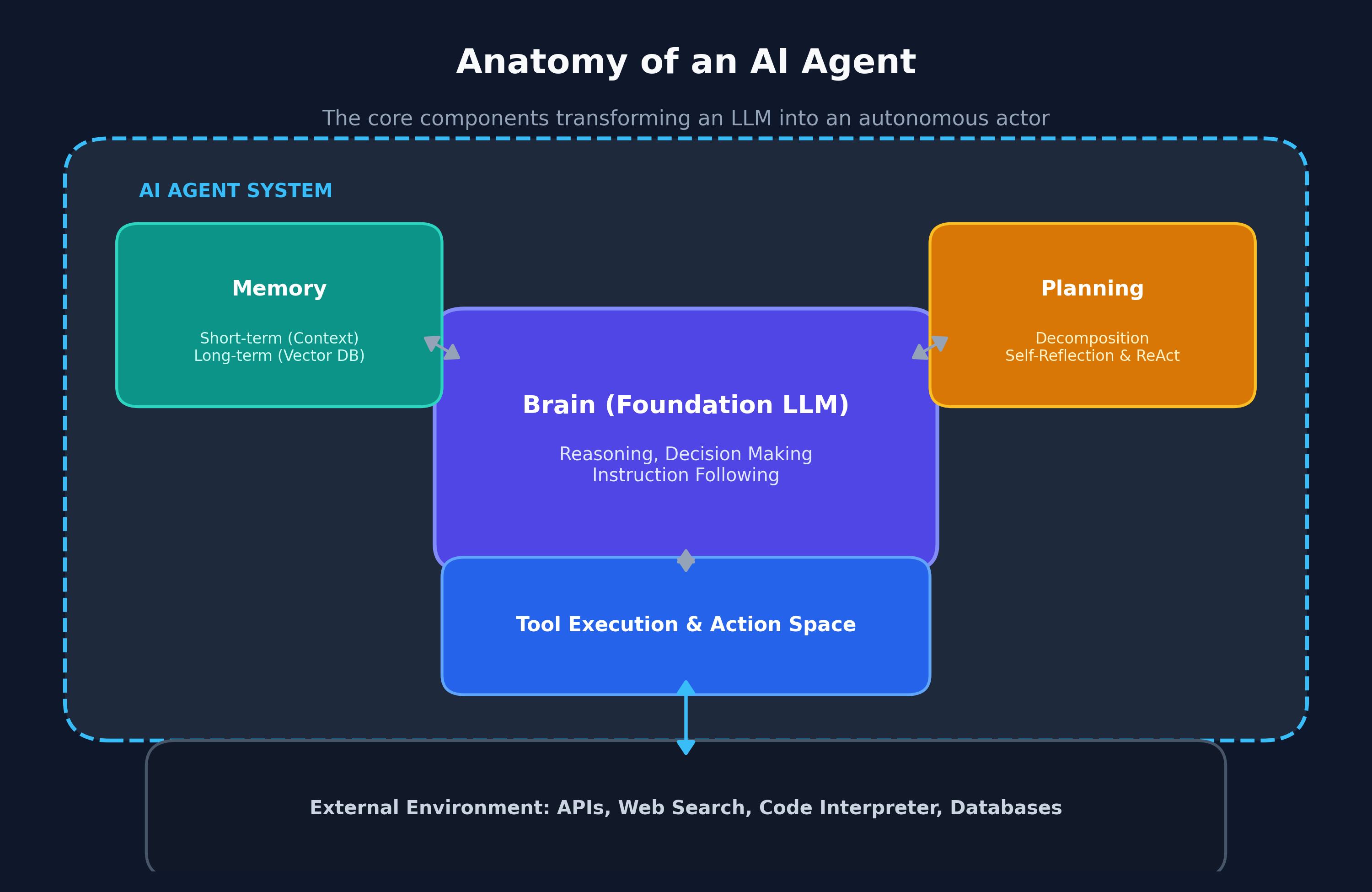
Autonomous AI agents—whether executing multi-step web research, conducting competitive lead analysis, or debugging complex codebases—operate through multi-turn conversational loops. However, as an agent loop progresses past 10, 20, or 30 turns, engineering teams hit an acute operational barrier: the context prefix penalty.
In standard autoregressive transformer inference, every single turn requires the model to re-process the entire prompt prefix from token zero:
- Redundant Key-Value Tensor Computation: If an agent’s prompt contains a 4,000-token system instruction, 12 tool definitions (e.g., via Model Context Protocol or REST endpoints), and 30,000 tokens of accumulated research documents, the GPU recomputes the self-attention Key and Value (KV) matrices across all 35,000+ tokens on every single tool step.
- Runaway Time-to-First-Token (TTFT): Before the model can emit its first reasoning token or execute a tool call, it must finish the forward prefill pass across the entire historical transcript. At 50,000 tokens, TTFT regularly exceeds 5 to 10 seconds per turn, rendering interactive agents sluggish.
- Exploding Token Economics: Cloud LLM providers charge per input token on every API call. In an agent loop executing 25 sequential tool calls over a 40,000-token document, the application pays for 1,000,000 input tokens ($40,000 \times 25$), even though 95% of that context was completely static across turns.
Historically, teams attempted to mitigate this by aggressively pruning conversation history or truncating tool schemas. However, aggressive context truncation causes context amnesia, tool misuse, and reasoning loops.
The Solution: KV Cache Reuse and Provider-Level Prefix Caching
To solve the context penalty without sacrificing working memory, modern inference infrastructure has standardized on Prompt Caching (also known as Automatic Prefix Caching or KV Cache Reuse). Available natively across frontier providers (Anthropic Prompt Caching, OpenAI automatic caching, and vLLM Automatic Prefix Caching APC), prompt caching stores pre-computed KV attention tensors in GPU High Bandwidth Memory (HBM) across request boundaries.
The Mechanics: Prefix-Tree Matching in GPU VRAM
When an agent dispatches an inference request:
- Prefix Hashing & Block Lookup: The inference engine computes a cryptographic hash of the input token sequence in contiguous blocks (e.g., 64 to 128 tokens per block in vLLM’s PagedAttention).
- Cache Hit Identification: The engine checks whether the initial segment of tokens matches an existing KV cache tensor already residing in GPU memory.
- Bypassing the Prefill Phase: For all cached prefix tokens, the GPU skips tensor projection and matrix multiplication entirely. It loads the cached Key and Value vectors directly, processing only newly appended tokens (the dynamic delta).
- Economic and Speed Dividends:
- Cost Reduction: Cached input tokens are billed at a 75% to 90% discount compared to standard input pricing.
- Latency Reduction: Time-to-First-Token drops by up to 80%, enabling complex agents to reason with near-instantaneous responsiveness.
Comparing LLM Context Strategies
| Architectural Dimension | Naive Uncached Prompting | Semantic Caching (Vector Similarity) | Hardware KV Prompt Caching |
|---|---|---|---|
| Cache Mechanism | None (full recomputation) | Embedding similarity of user prompt | Exact token prefix match in GPU VRAM |
| Generative Flexibility | Full dynamic generation | Returns static cached response | Full dynamic generation with new tokens |
| Agent Loop Viability | Fails (quadratic cost & latency) | Inapplicable to iterative multi-turn steps | Optimal (built specifically for multi-turn) |
| Input Cost Discount | 0% (full price per turn) | 100% on cache hits (0% on misses) | 75% to 90% discount on cached prefix |
| TTFT Impact | Scales linearly with context length | Instant (on exact hit) | Sub-second even with 100k+ tokens |
Implementation: Structuring Cache-Optimized Agent Prompts
Unlocking high prompt cache hit rates requires deliberate architectural discipline: Prefix Stability. Because prompt caching relies on exact sequence matching from token zero, any dynamic variable placed at the beginning of a prompt invalidates the entire downstream cache.
The Golden Rule of Cache Alignment: Static to Dynamic
Always organize your agent prompt payload in strict hierarchical order:
- Static System Instructions (Cold Prefix): System persona, operational guidelines, and safety policies.
- Tool Definitions & Schemas: Function signatures (e.g., via AiFetchly Data Fetching tools).
- Reference Knowledge / Background Documents: Uploaded manuals, static code files, or reference data.
- Historical Conversation Turns: Multi-turn message history.
- Dynamic Tail (Volatile Suffix): Current timestamp, ephemeral session variables, and the immediate user query.
Step 1: Implementing Explicit Cache Control in TypeScript
Frontier SDKs allow developers to set explicit cache breakpoints. Let us implement a cache-aligned agent runner using Anthropic’s prompt caching specification:
import Anthropic from '@anthropic-ai/sdk';

const anthropic = new Anthropic({ apiKey: process.env.ANTHROPIC_API_KEY });

export interface AgentSessionConfig {
  systemPrompt: string;
  referenceKnowledge: string;
  conversationHistory: Anthropic.MessageParam[];
  currentUserQuery: string;
}

export async function executeCacheOptimizedTurn(config: AgentSessionConfig) {
  const { systemPrompt, referenceKnowledge, conversationHistory, currentUserQuery } = config;

  console.log('[Agent Runtime] Dispatching turn with structured cache breakpoints...');

  const response = await anthropic.messages.create({
    model: 'claude-3-5-sonnet-20241022',
    max_tokens: 1024,
    // Step 1: Set persistent cache breakpoint on static system prompt & large reference doc
    system: [
      {
        type: 'text',
        text: systemPrompt,
      },
      {
        type: 'text',
        text: referenceKnowledge,
        cache_control: { type: 'ephemeral' }, // Cache breakpoint 1
      },
    ],
    messages: [
      ...conversationHistory,
      // Dynamic user turn at the tail of the message sequence
      {
        role: 'user',
        content: currentUserQuery,
      },
    ],
  });

  // Log cache telemetry to verify hit rate
  const usage = response.usage as any;
  console.log(`[Cache Telemetry] Created: ${usage.cache_creation_input_tokens || 0} tokens`);
  console.log(
    `[Cache Telemetry] Read (HIT): ${usage.cache_read_input_tokens || 0} tokens (90% savings)`,
  );
  console.log(`[Cache Telemetry] Uncached Input: ${usage.input_tokens} tokens`);

  return response;
} Production Best Practices for Prompt Caching
When operationalizing prompt caching across production fleets:
- Never Inject Current Timestamps into the System Prefix: Placing
Current Time: 2026-09-19 19:30:15inside your system prompt invalidates the cache every second. Inject timestamps inside the immediate user turn at the prompt tail. - Maintain Minimum Token Thresholds: Most cloud providers require a minimum prefix length (typically 1,024 to 2,048 tokens) before prompt caching activates. Ensure shared prefixes meet this minimum size threshold.
- Leverage Time-to-Live (TTL) Refreshes: Cached prefixes typically persist in GPU VRAM for 5 minutes. Each subsequent query that hits the cache refreshes the 5-minute TTL window automatically, keeping active agent sessions perpetually warm.
Conclusion
Prompt caching is the single highest-leverage optimization for multi-turn generative AI applications in 2026. By understanding KV cache reuse and structuring agent prompts with strict prefix stability, engineering teams can slash operational API bills by 90% while delivering near-instantaneous agent responsiveness.