Multi-Agent Debate: Consensus Architectures for AI Guide
The Problem: The Single-Agent Confirmation Bias Trap
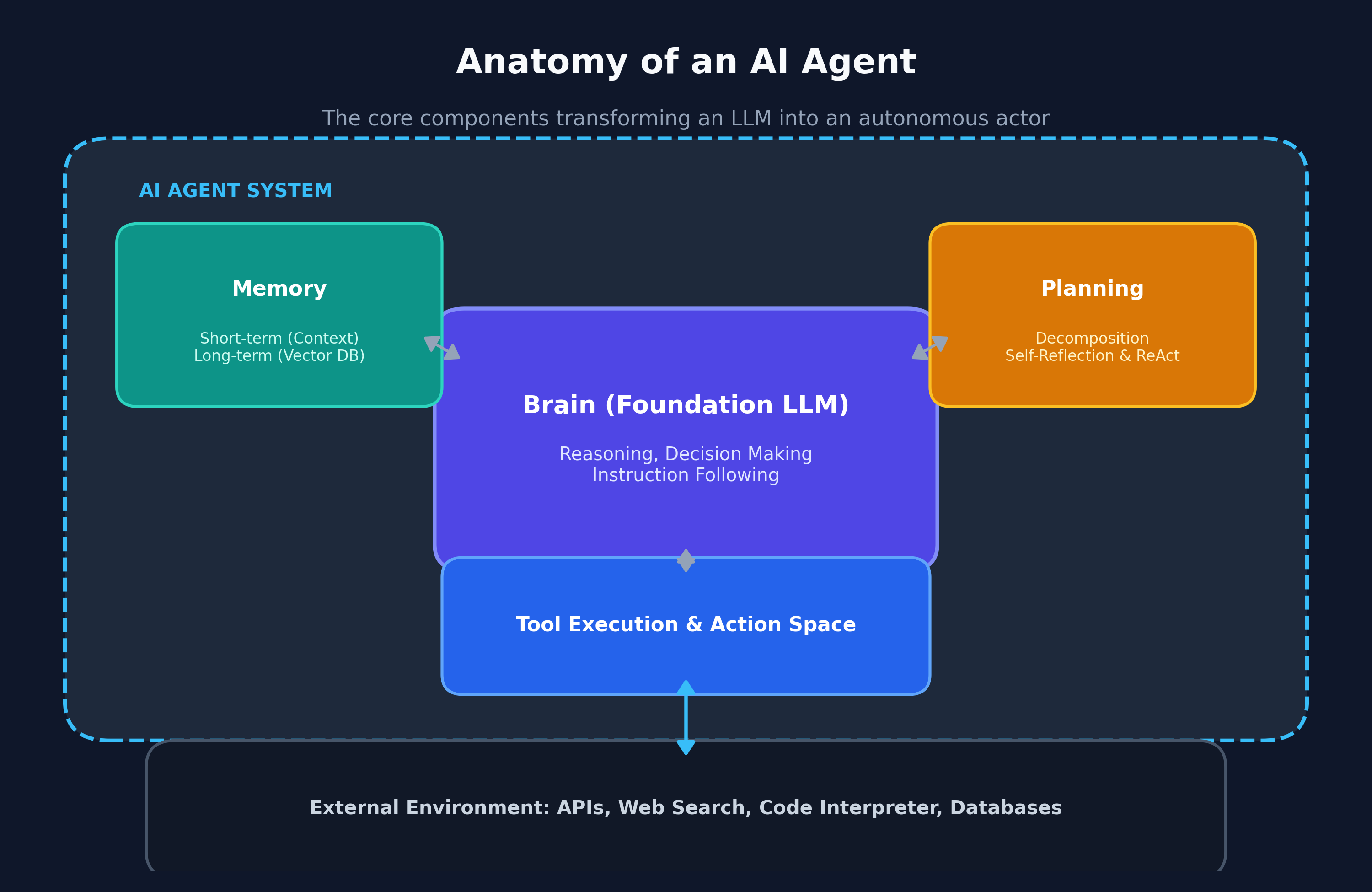
When software engineers deploy autonomous AI agents on high-stakes tasks—such as auditing security code, conducting corporate due diligence, or diagnosing complex data pipeline anomalies—they encounter an inherent cognitive vulnerability: single-agent confirmation bias.
Because modern language models are autoregressive token predictors, an agent naturally rationalizes its earlier assumptions. If an agent misinterprets an initial API parameter or hallucinates a premise in step 2 of a multi-step task, that hallucination enters its context window as ground truth:
- Hallucinatory Inertia: Rather than catching its own error, the agent constructs increasingly elaborate reasoning chains to defend the flawed premise, treating its own speculative output as factual context.
- Blindness to Edge Cases: A single system prompt prompts a single perspective. An agent instructed to optimize code performance will frequently overlook subtle concurrency race conditions or input sanitization vulnerabilities.
- The Self-Reflection Ceiling: While techniques like Reflexion encourage an agent to critique its own response, empirical research reveals that models are notoriously lenient when evaluating their own reasoning (“My solution looks optimal”), exhibiting severe blind spots to their own systemic errors.
The Solution: The Heterogeneous Multi-Agent Debate Council
To achieve institutional-grade accuracy, modern AI engineering architectures have adopted Multi-Agent Debate (MAD) governed by a structured Council Architecture.
Inspired by academic research (such as MIT’s Society of Mind evaluations, ChatEval, and recent heterogeneous consensus frameworks), MAD replaces the solitary agent loop with a deliberative assembly of distinct, competing agent personas.
The Four-Phase Debate Protocol
To prevent agents from merely agreeing with one another (the dreaded “sycophancy trap”), MAD enforces a strict, multi-round deliberation protocol:
- Blind Proposal Round (Preventing Anchoring Bias): Each participating agent receives the initial problem prompt and formulates its solution independently in parallel. Crucially, agents cannot view their peers’ work during this round. This preserves diversity and prevents early anchoring on a flawed initial response.
- Adversarial Cross-Examination: Every agent receives the anonymized proposals of all other council members. Agents are prompted as specialized critics—mandated to find logical contradictions, calculate counter-examples, and verify calculation bounds.
- Rebuttal and Iterative Refinement: Agents review the critiques leveled against their initial solutions. If a critique exposes a genuine error, the agent updates its solution; if a critique is flawed, the agent provides a counter-rebuttal.
- Consensus Adjudication (The Meta-Judge): A detached Meta-Judge agent (or an ensemble voting mechanism) reviews the complete multi-turn debate transcript. The judge weighs the strength of arguments, evaluates empirical evidence, and synthesizes the final, hardened decision.
Architectural Comparison: Single Agent vs. Swarms vs. Debate Council
| Dimension | Solitary Agent Loop | Multi-Agent Swarm (A2A Pipeline) | Multi-Agent Debate Council |
|---|---|---|---|
| Operational Topology | Sequential tool loop | Asynchronous task delegation | Adversarial multi-round deliberation |
| Error Handling | Self-reflection (high false positive) | Downstream agent catches upstream bugs | Rigorous peer cross-examination |
| Anchoring Bias | Extreme (rationalizes own errors) | Moderate | Zero (independent parallel generation) |
| Hallucination Rate | 8% – 15% on complex reasoning | 5% – 8% | < 1.5% (peer verified) |
| Best Used For | Direct tool actions, quick scripts | High-throughput data workflows | High-stakes architectural & legal decisions |
Implementation: Building a Multi-Agent Debate Protocol in TypeScript
Let us implement a complete Multi-Agent Debate Council in TypeScript using the Vercel AI SDK, featuring heterogeneous agent personas and structured critique rounds.
Step 1: Define Debate Personas and Proposal Schemas with Zod
Establish typed data contracts for candidate proposals, critiques, and final consensus:
import { z } from 'zod';

export const AgentProposalSchema = z.object({
  agentRole: z.string(),
  hypothesis: z.string(),
  justification: z.string(),
  identifiedRisks: z.array(z.string()),
});

export type AgentProposal = z.infer<typeof AgentProposalSchema>;

export const CritiqueSchema = z.object({
  criticRole: z.string(),
  targetAgentRole: z.string(),
  agreements: z.array(z.string()),
  flawsIdentified: z.array(z.string()),
  suggestedRevisions: z.string(),
});

export type Critique = z.infer<typeof CritiqueSchema>;

export const ConsensusVerdictSchema = z.object({
  winningHypothesis: z.string(),
  consensusConfidence: z.number().min(0).max(1),
  unresolvedDisagreements: z.array(z.string()),
  finalExecutiveSummary: z.string(),
});

export type ConsensusVerdict = z.infer<typeof ConsensusVerdictSchema>; Step 2: Execute Parallel Blind Proposal Round
Generate diverse initial strategies across distinct domain personas without peer influence:
import { generateObject } from 'ai';
import { openai } from '@ai-sdk/openai';

export const COUNCIL_PERSONAS = [
  {
    role: 'Security_Architect',
    systemPrompt:
      'You are a paranoid security engineer focused on zero-trust, data leakage, and attack surfaces.',
  },
  {
    role: 'Performance_Specialist',
    systemPrompt:
      'You are a systems engineer focused on throughput, latency minimization, and distributed scale.',
  },
  {
    role: 'Pragmatic_Developer',
    systemPrompt:
      'You are a software engineer focused on maintainability, developer ergonomics, and operational simplicity.',
  },
];

export async function runBlindProposalRound(problemStatement: string): Promise<AgentProposal[]> {
  console.log('[Phase 1] Launching parallel blind proposals across council...');

  const proposalPromises = COUNCIL_PERSONAS.map(async (persona) => {
    const { object } = await generateObject({
      model: openai('gpt-4o'),
      schema: AgentProposalSchema,
      system: persona.systemPrompt,
      prompt: `Problem Statement: ${problemStatement}\nFormulate your proposed solution independently.`,
    });
    return { ...object, agentRole: persona.role };
  });

  return Promise.all(proposalPromises);
} Step 3: Execute Cross-Examination Critique and Consensus Aggregation
Conduct peer critique and prompt the Meta-Judge to synthesize the hardened consensus:
export async function runCritiqueRound(
  problemStatement: string,
  proposals: AgentProposal[],
): Promise<Critique[]> {
  console.log('[Phase 2] Executing cross-examination critiques...');

  const critiquePromises: Promise<Critique>[] = [];

  for (const critic of COUNCIL_PERSONAS) {
    // Each agent critiques all proposals from other council members
    const targets = proposals.filter((p) => p.agentRole !== critic.role);

    for (const target of targets) {
      critiquePromises.push(
        (async () => {
          const { object } = await generateObject({
            model: openai('gpt-4o-mini'),
            schema: CritiqueSchema,
            system: critic.systemPrompt,
            prompt: `
Problem: ${problemStatement}
Target Proposal by [${target.agentRole}]:
Hypothesis: ${target.hypothesis}
Justification: ${target.justification}

Critique this proposal rigorously from your professional perspective. Challenge edge cases and identify hidden failure modes.`,
          });
          return { ...object, criticRole: critic.role, targetAgentRole: target.agentRole };
        })(),
      );
    }
  }

  return Promise.all(critiquePromises);
}

export async function adjudicateConsensus(
  problemStatement: string,
  proposals: AgentProposal[],
  critiques: Critique[],
): Promise<ConsensusVerdict> {
  console.log('[Phase 3] Meta-Judge deliberating over debate transcript...');

  const { object } = await generateObject({
    model: openai('gpt-4o'),
    schema: ConsensusVerdictSchema,
    system:
      'You are the Supreme Council Meta-Judge. You evaluate debates with absolute objectivity, selecting the most robust verified elements.',
    prompt: `
Problem Statement:
${problemStatement}

Initial Independent Proposals:
${JSON.stringify(proposals, null, 2)}

Cross-Examination Critiques:
${JSON.stringify(critiques, null, 2)}

Synthesize the definitive consensus verdict. Incorporate valid critiques to produce the hardened final strategy.`,
  });

  return object;
} Mitigating the “Sycophancy Trap” and Biased Consensus in 2026
When designing multi-agent debate protocols, software architects must guard against several failure modes:
- The Sycophancy Problem: If an agent is told “Model B is an expert model,” it will frequently abandon its correct reasoning to agree with the perceived authority. Always anonymize proposals (
Agent 1,Agent 2) during critique rounds. - Homogeneous Model Collapse: If all council members use the exact same model checkpoint and temperature, they share the same underlying blind spots. Enforce diversity by mixing foundation model families (e.g., Claude 3.5 Sonnet, GPT-4o, and DeepSeek V3) within the council.
- Halting Conditions and Token Budgets: Limit debates to 2 or 3 structured rounds. Beyond 3 rounds, debates experience diminishing returns and devolve into semantic hair-splitting without improving task accuracy.
Conclusion
Single-agent workflows are inherently constrained by confirmation bias and prompt blind spots. By orchestrating heterogeneous multi-agent debates with blind proposal generation, structured cross-examination, and objective consensus synthesis, engineering teams unlock reliable, self-correcting AI systems capable of executing mission-critical enterprise decisions.