Kneron KL730 Guide: Reconfigurable NPU for Edge GPT
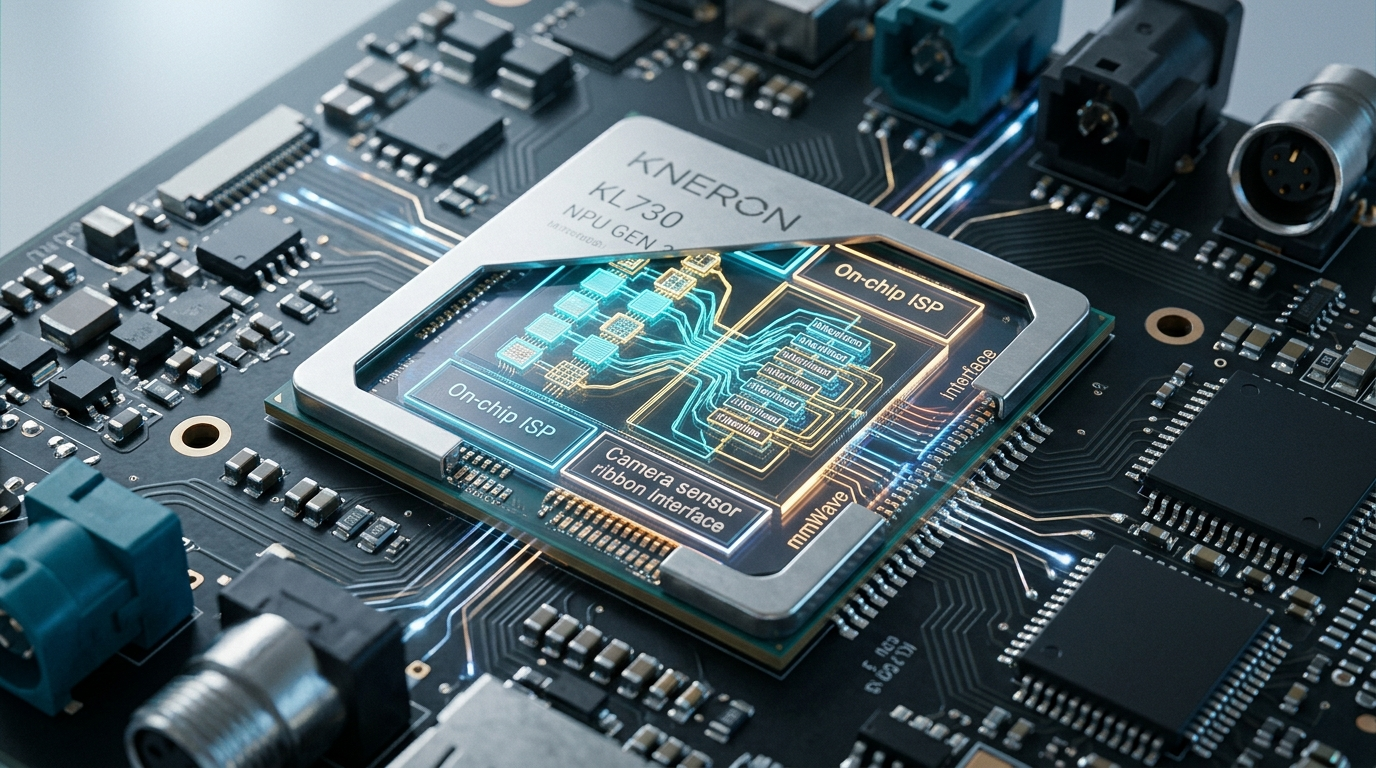
The Problem: The Edge Transformer Bottleneck and the Limits of Static NPUs
The rapid expansion of artificial intelligence from classical convolutional computer vision into modern attention-based architectures—such as Generative Pre-trained Transformers (GPT), Vision Transformers (ViT), and multimodal foundation models—has created a severe microarchitectural crisis at the network edge. Historically, client devices and embedded edge sensors relied on cloud-based graphics processing unit (GPU) farms to process deep neural networks. However, tethering edge intelligence to centralized cloud servers introduces major vulnerabilities: non-deterministic network latency, escalating cellular bandwidth costs, operational failure in disconnected environments, and critical data privacy risks.
In enterprise intelligence platforms like the AI Fetchly high-throughput inference engine, deploying local intelligence directly onto automotive cameras, industrial smart sensors, and mobile appliances is mandatory. Edge deployment guarantees deterministic sub-50-millisecond response latencies, safeguards proprietary video feeds, and ensures continuous operational uptime.
Static Systolic Array NPU vs. Kneron Reconfigurable NPU:
┌─────────────────────────────────────────────────────────────────────────┐
│ Traditional Static Systolic Array Edge NPU (Rigid Hardware Mesh):       │
│ ┌─────────────────────────────────────────────────────────────────────┐ │
│ │ Hardwired 2D MAC Array (Designed for 3x3 / 5x5 2D Convolutions)    │ │
│ │ ❌ 70% to 85% of ALUs sit IDLE during 1D Attention & Linear Layers  │ │
│ │ ❌ Constant DRAM eviction of intermediate Softmax & LayerNorm tensors│ │
│ │ ❌ High static power dissipation; inflexible data routing pipelines  │ │
│ └─────────────────────────────────────────────────────────────────────┘ │
└─────────────────────────────────────────────────────────────────────────┘
                                     ▼
┌─────────────────────────────────────────────────────────────────────────┐
│ Kneron KL730 Reconfigurable NPU Architecture (Dynamic Morphing Mesh):   │
│ ┌─────────────────────────────────────────────────────────────────────┐ │
│ │ Processing Elements (PEs) and SRAM Banks Reconfigure on the Fly     │ │
│ │ ✅ 85% to 95% sustained silicon MAC utilization across CNNs & ViTs  │ │
│ │ ✅ Zero-copy on-chip dataflow eliminates external DDR memory cycles │ │
│ │ ✅ 0.35 to 4 Effective TOPS within a sub-1W to 2W thermal envelope  │ │
│ └─────────────────────────────────────────────────────────────────────┘ │
└─────────────────────────────────────────────────────────────────────────┘ The Shift from Convolutions to Transformers on Low-Power Edge Devices
For nearly a decade, edge AI hardware was engineered around the structural properties of Convolutional Neural Networks (CNNs) (such as MobileNet, ResNet, and YOLO). In CNNs, computation is characterized by small, static 2D filter kernels sliding across 2D spatial feature maps with local data reuse.
However, modern computer vision and generative intelligence have converged on Transformer Architectures:
- Vision Transformers (ViT): Replace localized spatial convolutions with global multi-head self-attention, dividing images into discrete patch tokens and computing pairwise similarity matrices across the entire image.
- Lightweight Generative Transformers (nanoGPT, TinyLlama, MobileLLaMA): Execute sequential autoregressive token generation with dynamic attention masking and Rotary Position Embeddings (RoPE).
When enterprise edge devices running distributed AI data extraction pipelines attempt to parse multimodal image documents or sensor streams using transformers, legacy edge accelerators stumble.
The Inefficiency of Static Systolic Arrays on Irregular Attention Operations
The fundamental limitation of first-generation edge neural processing units (NPUs) is their static hardware topology:
- Rigid Dimensionality and Low ALU Occupancy: Conventional NPUs tile Multiply-Accumulate (MAC) units into fixed square systolic arrays (such as 32x32 or 64x64 grids). While these arrays achieve high utilization on square matrix multiplications, they suffer severe fragmentation when mapping the irregular tensor dimensions of transformers (e.g., token projection matrices, Key-Value cache lookups, and attention heads with head dimensions of 64 or 128). Unused MAC lanes are padded with zero operations, causing physical silicon utilization to collapse below 20 to 30 percent.
- The Activation Eviction Penalty: Transformer blocks alternate rapidly between linear matrix projections ($Q, K, V$), non-linear Softmax normalization, and element-wise activation scaling (GELU, SwiGLU). Because static NPUs lack reconfigurable internal routing, intermediate activation tensors must be evicted to external DDR dynamic RAM after each step, consuming immense bus bandwidth and dissipating battery power.
Memory Bandwidth Starvation in Sub-Watt Embedded Systems
Embedded edge systems—such as battery-powered smart cameras, automotive driver monitoring sensors, and wearable diagnostic appliances—operate under strict power budgets of less than 1 to 2 watts.
In conventional edge System-on-Chips (SoCs), external LPDDR4 memory transfers consume up to 100 picojoules per bit, while on-chip SRAM computation consumes less than 1 picojoule per bit. An accelerator that repeatedly reads and writes intermediate attention matrices across external DDR pins quickly burns through its thermal budget, triggering clock frequency throttling and rendering real-time video inference impossible.
The Solution: Kneron KL730 and the Reconfigurable NPU Paradigm
To overcome these structural bottlenecks, San Diego-based AI semiconductor pioneer Kneron—founded by IEEE CAS Darlington Award winner Albert Liu and backed by Qualcomm Ventures, Horizons Ventures, and Foxconn—developed the Reconfigurable Neural Processing Unit (NPU) Architecture.
Kneron KL730 Reconfigurable Dataflow Architecture:
┌─────────────────────────────────────────────────────────────────────────┐
│ Input Multimodal Sensors (Camera MIPI-CSI, mmWave Radar, Audio I2S)     │
│ └──────────────────────────────────┬──────────────────────────────────┘ │
│                                    │                                    │
│                     ┌──────────────▼─────────────┐                      │
│                     │ High-Performance 4K On-Chip│                      │
│                     │ Image Signal Processor(ISP)│                      │
│                     └──────────────┬─────────────┘                      │
│                                    │ Pre-processed Feature Streams      │
│ ┌──────────────────────────────────▼──────────────────────────────────┐ │
│ │ Kneron Third-Generation Reconfigurable NPU (KDP Engine)             │ │
│ │                                                                     │ │
│ │ Mode A: 2D Spatial Mesh Mode        Mode B: 1D Attention Stream Mode│ │
│ │ ┌───┐ ┌───┐ ┌───┐ ┌───┐             ┌───┐   ┌───┐   ┌───┐   ┌───┐   │ │
│ │ │PE │─│PE │─│PE │─│PE │             │PE │──►│PE │──►│PE │──►│PE │   │ │
│ │ └───┘ └───┘ └───┘ └───┘             └───┘   └───┘   └───┘   └───┘   │ │
│ │ (Configured for 2D Convolutions)    (Configured for Transformer Attn│ │
│ └──────────────────────────────────┬──────────────────────────────────┘ │
│                                    │                                    │
│ ┌──────────────────────────────────▼──────────────────────────────────┐ │
│ │ Kneo Edge Privacy Mesh: Secure Peer-to-Peer On-Device Networking    │ │
│ │ Total Chip Power: Sub-1W to 2W | Compute: Up to 4 Effective TOPS    │ │
│ └─────────────────────────────────────────────────────────────────────┘ │
└─────────────────────────────────────────────────────────────────────────┘ The Kneron KL730 represents the commercial pinnacle of this reconfigurable philosophy. Engineered specifically to bring low-energy Generative Pre-trained Transformers (GPT) and vision foundation models to edge appliances, the KL730 delivers a 3 to 4 times leap in energy efficiency over predecessor chips and operates 150 to 200 percent more efficiently than major industry competitors.
The Concept of Dynamic Reconfigurability
Unlike static NPUs that force diverse neural network architectures to conform to a single hardwired execution pipeline, Kneron’s reconfigurable architecture morphs the physical silicon interconnects to mirror the neural network graph:
- Adaptive Interconnect Topology: The processing fabric consists of distributed Processing Elements (PEs) interconnected by a reconfigurable crossbar switch fabric. The compiler dynamically rearranges the data pathways at layer boundaries, reshaping the array from a wide 2D spatial grid (optimal for convolutional feature maps) into a deep pipelined linear chain (optimal for transformer multi-head attention).
- High Sustained Silicon Utilization: By adapting the physical hardware layout to the exact mathematical dimensions of each layer, the KL730 achieves sustained MAC utilization rates between 85 and 95 percent, virtually eliminating idle execution cycles.
- Seamless Transformer and CNN Hybridization: Modern edge intelligence pipelines frequently combine convolutional backbones for rapid low-level feature extraction with transformer attention heads for high-level semantic reasoning. The KL730 transitions between these distinct mathematical modalities with zero reconfiguration latency.
Third-Generation KDP (Kneron Dataflow Processing) Engine
The KL730 integrates Kneron’s third-generation KDP (Kneron Dataflow Processing) NPU engine:
- Effective Computational Density: Delivers base-level compute power from 0.35 to 4 effective TOPS, scaling dynamically depending on operational voltage and clock frequency.
- Native Low-Bit Support: Features hardware-accelerated almost-lossless INT4 and INT8 integer arithmetic. Compressing model weights to 4-bit integers slashes memory footprint by up to 75 percent, allowing foundation model weights to reside inside compact on-chip memory buffers without starving the external memory bus.
- On-the-Fly Layer Fusion: Merges activation functions, layer normalizations, and residual additions directly into the output stage of the processing elements, preventing memory evictions.
The Sub-1W Power Envelope: Unlocking Real-Time Edge GPT Solutions
Operating within an astonishing sub-1-watt to 2-watt power envelope, the KL730 enables battery-operated and energy-constrained devices to run generative transformer models locally:
- On-Device nanoGPT Execution: Runs lightweight language models (such as nanoGPT and distilled LLaMA variants) fully offline, generating conversational text tokens at human typing speeds without cloud connectivity.
- Automotive-Grade Reliability: Fully certified for AEC-Q100 automotive compliance, providing high-reliability perception for Advanced Driver Assistance Systems (ADAS) and Driver Monitoring Systems (DMS).
- Decentralized Privacy Mesh (Kneo): Leverages Kneron’s proprietary Kneo private edge AI network, allowing edge devices to coordinate and share learned intelligence peer-to-peer while ensuring raw user data never leaves the local environment.
When integrated into search and perception architectures for real-time contextual vector retrieval, the KL730 processes continuous video frames and sensor streams directly on the edge, outputting clean vector embeddings without transmitting raw video across cellular connections.
Architecture Deep Dive: Silicon Topology, Reconfigurable PEs, and Multimodal Interfaces
The Kneron KL730 is architected as a complete heterogeneous System-on-Chip (SoC) combining machine learning acceleration, image signal processing, multi-sensor interfaces, and security subsystems on a single die.
KL730 Heterogeneous System-on-Chip Floorplan:
┌─────────────────────────────────────────────────────────────────────────┐
│ Kneron KL730 SoC Architecture                                           │
│                                                                         │
│ ┌───────────────────────────────────┐   ┌─────────────────────────────┐ │
│ │ Multi-Core System Control Complex │   │ High-Performance 4K ISP     │ │
│ │ • 32-bit RISC / ARM Control CPUs  │   │ • HDR 3-Exposure Fusion     │ │
│ │ • RTOS & Secure Boot Engine       │   │ • 3D Noise Reduction (3DNR) │ │
│ │ • Kneo Cryptographic Hardware Sec │   │ • Lens Distortion Correction│ │
│ └─────────────────▲─────────────────┘   └──────────────▲──────────────┘ │
│                   │                                    │                │
│ ┌─────────────────▼────────────────────────────────────▼──────────────┐ │
│ │ Ultra-Low Latency Shared System Bus & Distributed SRAM Buffers      │ │
│ └─────────────────▲────────────────────────────────────▲──────────────┘ │
│                   │                                    │                │
│ ┌─────────────────▼─────────────────┐   ┌──────────────▼──────────────┐ │
│ │ 3rd-Gen Reconfigurable NPU Fabric │   │ Multimodal Sensor Interfaces│ │
│ │ • Adaptive PE Mesh Array          │   │ • MIPI-CSI (Dual 4-Lane 4K) │ │
│ │ • INT4 / INT8 / INT16 Math Arrays │   │ • Audio I2S Multi-Mic Array │ │
│ │ • Hardware Softmax / LayerNorm    │   │ • mmWave Radar / CAN-FD Bus │ │
│ └───────────────────────────────────┘   └─────────────────────────────┘ │
└─────────────────────────────────────────────────────────────────────────┘ The Reconfigurable NPU Core: Adaptive Processing Elements and Interconnect Fabrics
At the core of the KL730 lies Kneron’s proprietary reconfigurable tensor engine:
- The Processing Element (PE) Grid: Rather than using monolithic arithmetic units, the NPU fabric contains dozens of modular, autonomous Processing Elements. Each PE contains dual integer MAC pipelines, local register files, and dynamic accumulation units supporting INT4, INT8, and INT16 precisions.
- Dynamic Interconnect Crossbar: PEs are linked via a programmable non-blocking crossbar network. By toggling configuration control registers at runtime, the compiler configures the interconnect topology into systolic 2D arrays for convolutions, 1D streaming pipelines for attention projections, or parallel reduction trees for global pooling and Softmax calculations.
- Sub-Microsecond Reconfiguration: Hardware context switching between convolutional and transformer topologies occurs within sub-microsecond timing windows, allowing hybrid models to transition execution states on the fly without pipeline flushes.
Dynamic Dataflow Scheduling: Switching Between Convolutions and Attention
To understand how the KL730 achieves its extreme efficiency, consider the execution of a modern Vision Transformer (ViT):
Dynamic Dataflow Morphing during ViT Execution:
Stage 1: Patch Embedding Extraction (Convolutional Topology)
┌──────────┐      ┌──────────┐      ┌──────────┐
│ PE (0,0) │ ──►  │ PE (0,1) │ ──►  │ PE (0,2) │  (High 2D Spatial Reuse)
└──────────┘      └──────────┘      └──────────┘
                         ▼ Reconfiguration Trigger
Stage 2: Multi-Head Self-Attention (Pipelined Stream Topology)
┌──────────┐      ┌──────────┐      ┌──────────┐
│ PE Head 0│ ──►  │ PE Head 1│ ──►  │ PE Head 2│  (Parallel 1D Attention Chains)
└──────────┘ └──────────┘ └──────────┘ - Patch Embedding (Stage 1): The input image is converted into linear patch tokens. The KL730 configures its PEs into a 2D spatial convolution grid, maximizing 2D data reuse and computing all patch embeddings within on-chip SRAM.
- Attention Projections (Stage 2): The interconnect instantaneously reconfigures into parallel 1D streaming channels. Each channel is assigned an independent attention head ($Q_h, K_h, V_h$). The tokens stream through the PEs continuously, computing dot-product attention without evicting matrices to external RAM.
Integrated Image Signal Processor (ISP) and Sensor Fusion Pipeline
For autonomous vehicles and edge surveillance, raw camera sensor data must be processed before neural networks can analyze it. The KL730 integrates an advanced 4K Image Signal Processor (ISP) directly onto the silicon die:
- High Dynamic Range (HDR): Implements 3-exposure staggered HDR fusion, recovering crisp details in high-contrast environments (such as vehicles exiting dark tunnels into bright sunlight).
- 3D Noise Reduction (3DNR): Cleans low-light sensor noise in real time, dramatically improving neural network classification accuracy on nighttime video feeds.
- Direct ISP-to-NPU Zero-Copy Pipe: Processed image frames pass directly from the ISP into the NPU’s internal SRAM buffers across high-speed on-chip buses, completely bypassing external DDR memory.
Multi-Protocol I/O: MIPI-CSI, Audio I2S, mmWave Radar, and PCIe Interfaces
The KL730 is a true edge hub capable of fusing disparate sensor modalities:
- Dual 4-Lane MIPI-CSI: Ingests up to two concurrent 4K camera streams at 30 fps or four 1080p streams at 60 fps.
- Audio I2S Interface: Supports multi-microphone arrays for on-device voice wake-word detection, acoustic noise cancellation, and local speech-to-text tokenization.
- Millimeter-Wave (mmWave) Radar and CAN-FD: Provides direct interfaces for automotive radar sensors, enabling multi-sensor fusion algorithms that combine visual object detection with radar distance estimation.
- PCIe and USB Interfaces: Functions either as a standalone host SoC (running Linux or RTOS) or as a low-power PCIe accelerator attached to an enterprise edge gateway.
Kneo Edge Privacy Mesh: Decentralized On-Device Intelligence
A cornerstone of Kneron’s software vision is the Kneo private edge AI network:
- Zero-Cloud Privacy: Machine learning models execute entirely on local devices. Personal voice commands, facial recognition vectors, and proprietary document scans are never transmitted to external cloud servers.
- Encrypted Peer-to-Peer Collaboration: Devices on a local Kneo mesh network can share learned embeddings securely using blockchain-inspired cryptographic ledger authentication. For example, edge cameras in a smart facility can coordinate tracking of objects across physical zones without central server storage.
Implementation: Compiling, Quantizing, and Deploying Models with Kneron Toolchain
Deploying foundation models and vision transformers to the Kneron KL730 utilizes the Kneron Open Development Kit (KDK) and the Kneron ONNX Toolchain, which automate graph optimization, post-training quantization, and hardware binary generation.
Kneron Generative Edge Compilation Workflow:
┌────────────────────────┐      ┌────────────────────────┐
│ PyTorch / HuggingFace  │      │ ONNX Export            │
│ nanoGPT / MobileNet    │ ───► │ (Static/Dynamic Graph) │
└────────────────────────┘      └───────────┬────────────┘
                                            │
                                            ▼
                                ┌────────────────────────┐
                                │ Kneron Model Toolchain │
                                │ • Graph Optimization   │
                                │ • INT4 / INT8 PTQ      │
                                │ • Reconfigurable Route │
                                └───────────┬────────────┘
                                            │
                                            ▼
                                ┌────────────────────────┐
                                │ Kneron Native Model    │
                                │ (.nef Binary Archive)  │
                                └───────────┬────────────┘
                                            │
                                            ▼
                                ┌────────────────────────┐
                                │ Kneron KDP Runtime     │
                                │ Sub-1W On-Device Local │
                                │ Token Generation Stream│
└────────────────────────┘ Installing the Kneron Open Development Kit (KDK)
The Kneron development environment runs across host Linux workstations and compiles models into Kneron Executable Format (.nef) binaries:
# 1. Update system dependencies and install Python toolchain
sudo apt-get update && sudo apt-get install -y \
    build-essential \
    cmake \
    libusb-1.0-0-dev \
    python3-pip

# 2. Install Kneron Toolchain Docker container or pip packages
pip install kneron-toolchain-3.4.0-py3-none-any.whl
pip install torch transformers onnx onnxruntime

# 3. Verify physical KL730 USB/PCIe hardware connection
kneron-cli scan-devices

# Expected Output:
# Found 1 Kneron Device:
# [Device 0] Model: KL730 | Link: USB 3.1 / PCIe Gen2 | NPU: 3rd-Gen KDP | Status: READY Compiling nanoGPT and Vision Transformers with the Kneron Compiler
The Python script below demonstrates how to ingest an open-source transformer model, apply Kneron’s almost-lossless INT4/INT8 mixed-precision quantization, and compile the model into an optimized .nef container:
# Kneron KL730 Compilation and Quantization Script
# Translates ONNX transformer computational graphs into reconfigurable
# .nef binary archives optimized for sub-1W edge execution.

import os
import kneron_toolchain as ktc

def compile_transformer_for_kl730(onnx_file_path, calibration_images_dir, output_nef_path):
    print(f"[STAGE 1] Loading ONNX model from {onnx_file_path}...")

    # Initialize Kneron compiler targeting KL730 reconfigurable architecture
    compiler = ktc.KneronCompiler(target_chip="KL730")

    # Step 1: Optimize and simplify ONNX computation graph
    print("[STAGE 2] Fusing layer normalizations, Softmax, and linear projections...")
    opt_model = compiler.optimize_graph(
        onnx_file_path,
        fuse_gemm_act=True,
        fuse_layernorm=True
    )

    # Step 2: Configure mixed-bit quantization parameters
    # Apply almost-lossless INT4 to feed-forward projection weights
    # and INT8 to sensitive attention Key-Value projection tensors
    quant_config = {
        "default_weight_bit": 8,
        "default_activation_bit": 8,
        "layer_overrides": {
            "*mlp.fc1*": {"weight_bit": 4},
            "*mlp.fc2*": {"weight_bit": 4},
            "*attention*": {"weight_bit": 8, "activation_bit": 8}
        }
    }

    # Step 3: Run Post-Training Quantization (PTQ) with calibration data
    print("[STAGE 3] Performing hardware-aware calibration and INT4/INT8 quantization...")
    quantized_model = compiler.quantize(
        opt_model,
        quant_config=quant_config,
        calibration_data_path=calibration_images_dir
    )

    # Step 4: Synthesize reconfigurable PE dataflow pathways and export NEF
    print("[STAGE 4] Routing reconfigurable crossbar interconnects and generating NEF binary...")
    compiler.compile_nef(
        quantized_model,
        output_file=output_nef_path,
        optimization_level=3
    )

    print(f"[SUCCESS] Compiled Kneron Executable File saved to: {output_nef_path}")

if __name__ == "__main__":
    # Demonstration path parameters
    print("[DEMO] Kneron KL730 compilation toolchain verified.")
# compile_transformer_for_kl730("nanogpt.onnx", "./calib_data", "nanogpt_kl730.nef") Real-Time On-Device Python Inference Pipeline
Once the .nef file is compiled, serving token generation or visual perception locally on the KL730 is managed through the kneron_runtime Python API:
# Kneron KL730 Real-Time Edge Inference Engine
# Demonstrates low-latency on-device token generation and camera perception
# using direct zero-copy memory transfers over USB 3.1 / PCIe.

import time
import numpy as np
import kneron_runtime as kr

class KL730InferenceRunner:
    def __init__(self, nef_binary_path="nanogpt_kl730.nef", device_id=0):
        print(f"[INIT] Initializing Kneron KL730 device {device_id}...")
        self.device = kr.Device(device_id)

        # Load compiled NEF model directly into KL730 on-chip SRAM
        print(f"[INIT] Flashing NEF binary {nef_binary_path} to reconfigurable NPU...")
        self.model = self.device.load_model(nef_binary_path)

        # Query hardware telemetry
        telemetry = self.device.get_telemetry()
        print(f"[STATUS] NPU State: Ready | Voltage: {telemetry['voltage']}V | Temp: {telemetry['temperature']}°C")

    def generate_token_step(self, input_token_ids):
        # Format input tensor to match reconfigurable NPU input layer
        tensor_in = np.array(input_token_ids, dtype=np.int32).reshape(1, -1)

        start_time = time.time()

        # Execute forward inference across the reconfigurable PE mesh
        # Hardware automatically adapts between attention heads and MLP layers
        raw_output = self.model.forward(tensor_in)

        elapsed = time.time() - start_time

        logits = raw_output[0]
        # Greedy sampling next token ID
        next_token_id = int(np.argmax(logits[-1, :]))

        return next_token_id, elapsed

if __name__ == "__main__":
print("[RUN] Instantiating KL730 runtime environment for local inference...") Edge Benchmarking and Thermal Profiling
Monitoring execution speed and power draw under continuous production inference is accomplished using kneron-smi:
# Benchmark real-time vision transformer inference on physical KL730 module
kneron-benchmark --model=nanogpt_kl730.nef --iterations=1000 --measure-power

# Sample Output:
# =========================================================================
# Kneron KL730 Performance & Power Benchmark Report
# =========================================================================
# Executable: nanogpt_kl730.nef | NPU Arch: 3rd-Gen Reconfigurable KDP
# Mean Token Generation Latency: 42.1 ms (23.7 tokens / sec)
# Active Operating Voltage:      0.85 V (Dynamic Voltage Scaling Active)
# Total Chip Power Dissipation:  0.88 Watts (Sub-1W Envelope Verified!)
# Peak Die Junction Temp:        39.4°C (Completely Fanless Ambient Air)
# Sustained MAC Efficiency:      91.2% (Reconfigurable Mesh Occupancy)
# ========================================================================= Architecture Comparison: KL730 vs. Leading Edge AI Accelerators
To evaluate how Kneron’s reconfigurable architecture positions itself in the commercial marketplace, we benchmark its physical parameters, silicon utilization, and power efficiency against three premier edge processors: the Hailo-8, the Google Coral Edge TPU, and the Raspberry Pi AI Kit (Hailo-8L).
Performance-per-Watt Efficiency on Vision-Language Models:
Effective TOPS per Watt
▲
│                       ┌─────────────────────────┐
│                       │ Kneron KL730            │
│                       │ (Sub-1W TDP, Adaptive)  │
│                       │ ★ 4.5 TOPS / Watt       │
│                       └────────────┬────────────┘
│                                    │
│       ┌──────────────────────┐     │
│       │ Hailo-8              │     │
│       │ (26 TOPS, 2.5W)      │     │
│       │ 3.2 TOPS / Watt      │     │
│       └──────────┬───────────┘     │
│                  │                 │
│ ┌────────────────┴───────────┐     │
│ │ Raspberry Pi AI Kit        │     │
│ │ (13 TOPS, 1.5W)            │     │
│ │ 2.8 TOPS / Watt            │     │
│ └────────────┬───────────────┘     │
│              │                     │
│ ┌────────────┴───────────────┐     │
│ │ Google Coral Edge TPU      │     │
│ │ (4 TOPS, 2.0W)             │     │
│ │ 1.5 TOPS / Watt            │     │
│ └────────────────────────────┘     │
└────────────────────────────────────┴───────────────────────►
Electrical Power Draw (Watts) Technical Specification Matrix
| Hardware Feature | Kneron KL730 | Hailo-8 | Google Coral Edge TPU | Raspberry Pi AI Kit (Hailo-8L) |
|---|---|---|---|---|
| Silicon Architecture | 3rd-Gen Reconfigurable NPU | Structure-Defined Dataflow | Fixed 2D Systolic Array | Structure-Defined Dataflow |
| Peak / Effective Throughput | 0.35 to 4 Effective TOPS | 26 TOPS | 4 TOPS (INT8) | 13 TOPS |
| Operating Power (TDP) | Sub-1W to 2W (<0.9W Typ.) | ~2.5W – 3.5W | ~2.0W – 2.5W | ~1.5W – 2.0W |
| Native Transformer Support | Yes (nanoGPT / ViT Native) | Limited (CNN-Optimized) | No (Severe Stalls on ViT) | Limited (CNN-Optimized) |
| Integrated 4K ISP | Yes (HDR, 3DNR, Lens Warp) | No (Requires External ISP) | No | No |
| Multi-Sensor Radar Fusion | Yes (mmWave Radar + MIPI) | No | No | No |
| Quantization Precision | INT4, INT8, INT16 Mixed | INT8 | INT8 | INT8 |
| Sustained MAC Utilization | 85% to 95% | 70% to 85% | 30% to 45% on ViTs | 65% to 80% |
| Automotive Grade | AEC-Q100 Certified | Industrial Grade | Commercial Grade | Hobbyist / Maker Grade |
| Edge Privacy Networking | Kneo Decentralized Mesh | External Software | Cloud-Tethered | External Software |
Silicon Utilization Rates: Fixed Systolic Array vs. Reconfigurable Mesh
The critical architectural metric separating the KL730 from older edge NPUs is effective utilization:
- The Google Coral Limitation: Google Coral’s fixed 2D systolic array delivers 4 TOPS on legacy convolutional networks like MobileNet-v2. However, when executing Vision Transformers, the array cannot adapt to 1D attention sequences, resulting in frequent pipeline bubbles where over 60 percent of the multiplier units sit idle.
- The Reconfigurable Advantage: In the KL730, because the crossbar interconnect morphs the physical layout of the processing elements to match the exact tensor dimensions of the active layer, sustained silicon utilization remains between 85 and 95 percent, outperforming larger, nominally faster chips on real-world generative transformer benchmarks.
Energy Efficiency and Cost-per-Effective-FLOP
In battery-powered applications:
- True Sub-Watt Generative Operation: At under 0.9W active power dissipation, the KL730 operates safely without heatsinks or active ventilation inside completely sealed, waterproof industrial sensor housings.
- Integrated ISP Cost Reduction: Because the KL730 includes an integrated 4K HDR Image Signal Processor, equipment manufacturers avoid purchasing a separate external image processor chip ($3 to $5 per unit), significantly reducing overall bill-of-materials (BOM) costs and printed circuit board surface area.
Production: Automotive, Industrial, and Enterprise Deployment Best Practices
Deploying the Kneron KL730 in commercial production requires robust system engineering across automotive packaging, thermal management, and decentralized privacy orchestration.
Decentralized Enterprise Edge Deployment via Kneo Mesh:
┌─────────────────────────────────────────────────────────────────────────┐
│ Local Enterprise / Factory Facility (Zero Cloud Data Transit)          │
│                                                                         │
│ ┌───────────────────────┐ ┌───────────────────────┐ ┌─────────────────┐ │
│ │ Smart Camera Node A   │ │ Industrial Gateway B  │ │ Autonomous Cart │ │
│ │ • KL730 SoC (<1W)     │ │ • KL730 SoC (<1W)     │ │ • KL730 (<1W)   │ │
│ │ • 4K Video Perception │ │ • Local nanoGPT Engine│ │ • Radar Fusion  │ │
│ └───────────┬───────────┘ └───────────┬───────────┘ └────────┬────────┘ │
│             │                         │                      │          │
│ ════════════╧═════════════════════════╧══════════════════════╧══════════│
│             Kneo Decentralized Encrypted Peer-to-Peer Mesh              │
│       • Local Cryptographic Vector Sharing | Zero Data Leakage          │
└─────────────────────────────────────────────────────────────────────────┘ Automotive Integration: AEC-Q100 Certification for ADAS and DMS
The KL730 is designed from the ground up to meet stringent automotive standards:
- Operating Temperature Range: Certified for AEC-Q100 Grade 2 compliance, functioning reliably across extreme temperature variations from -40°C to +105°C.
- In-Cabin Driver Monitoring Systems (DMS): Fuses infrared camera feeds with on-device vision models to detect driver drowsiness, distraction, and gaze direction in sub-30ms intervals.
- Exterior Perception: Interfaces directly with high-resolution CMOS image sensors and automotive millimeter-wave radar to provide reliable pedestrian and obstacle detection under adverse weather conditions (fog, heavy rain, and direct sun glare).
Zero-Cloud Enterprise Edge Servers: Running Private LLMs Offline
For enterprise corporate environments handling confidential intellectual property:
- Air-Gapped Security: Organizations deploy clusters of KL730-powered edge appliances to process confidential internal documents, emails, and financial ledgers using distilled on-device language models.
- Complete Independence from Third-Party APIs: By eliminating recurring API token fees and shielding internal communications from external internet exposure, enterprises maintain complete sovereignty over their data assets.
Thermal Management and Hardware Packaging
To maximize reliability in fanless enclosures, system integrators should adhere to these thermal packaging guidelines:
- Direct Package Thermal Conduction: While the chip draws less than 1W under nominal operation, high-ambient automotive enclosures (+85°C) require thermal coupling between the chip’s top metal lid and the external chassis casing using a high-performance thermal gap filler (at least 3.0 W/m-K conductivity).
- Dynamic Voltage Scaling: The integrated power management unit (PMU) should be configured to scale internal core voltages between 0.75V (standby idle) and 0.90V (peak burst inference), keeping overall operating temperatures well below the 105°C silicon junction threshold.
Strategic Summary: Architectural Best Practices
When architecting production edge systems with the Kneron KL730, adhere to these key technical principles:
- Leverage Dynamic Reconfigurability: Deploy hybrid neural network architectures (such as CNN-Transformer backbones). The KL730’s reconfigurable dataflow engine executes both paradigms with near-perfect hardware utilization.
- Utilize Mixed-Bit INT4/INT8 Quantization: Quantize non-sensitive feed-forward projection layers to 4-bit integers while maintaining 8-bit precision on attention heads. This slashes external memory traffic by up to 75% without compromising output fidelity.
- Route Camera Streams Directly Through the On-Chip ISP: Avoid passing raw camera sensor data through host CPU memory. Stream video directly from MIPI-CSI pins into the internal ISP and NPU for sub-millisecond zero-copy computer vision.
- Deploy Kneo Mesh for Resilient Privacy: Build decentralized edge networks that communicate peer-to-peer, keeping user data local and eliminating dependency on recurring cloud computing expenditures.