Compound AI Systems: Architecture & Multi-Model Guide
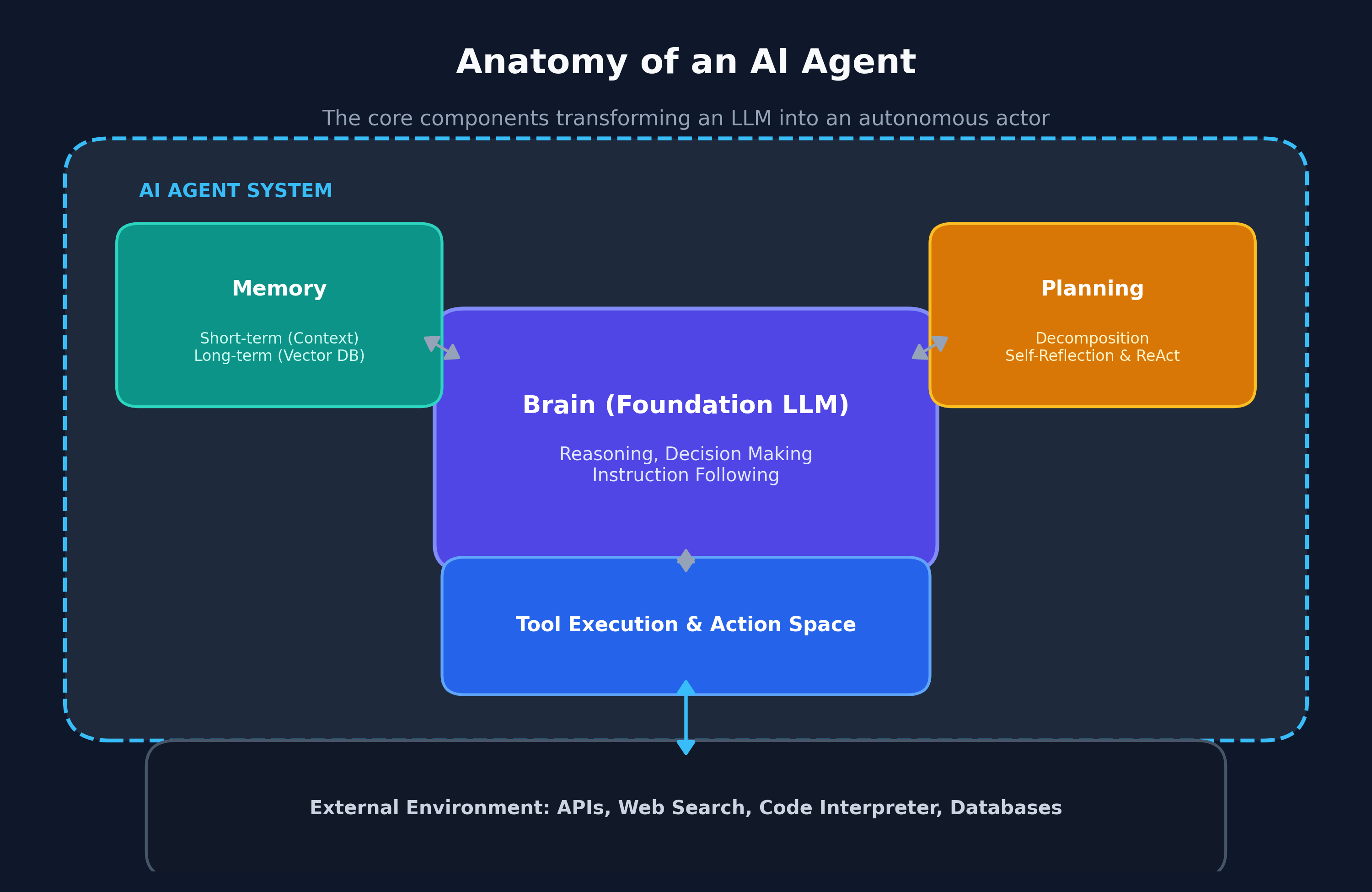
The Problem: The Ceiling of Monolithic Foundation Models
For the past several years, the primary enterprise strategy for improving AI application performance was simple: upgrade to the newest, largest frontier model. However, engineering teams deploying large-scale production applications have hit an unmistakable architectural ceiling:
- Diminishing Returns on Scale: Moving from a 70B parameter model to a 400B+ frontier model delivers marginal improvements on domain-specific reasoning, but multiplies operational latency and API billing by 5× to 10×.
- The “Jack of All Trades” Dilemma: A single monolithic model must balance creative conversational fluency, mathematical computation, foreign languages, and code generation. Forcing a monolithic generalist model to execute specialized extraction tasks leads to subtle hallucinations and non-deterministic formatting errors.
- Runaway Latency & Financial Inefficiencies: Sending simple triage requests, data classification queries, or JSON transformations to multi-billion parameter frontier models wastes compute cycles. Monolithic architectures treat every sub-task with uniform heavyweight computation.
- Lack of Verification and Error Containment: When a monolithic model produces an error in a multi-step prompt, that error cascades through the rest of the generation. Monolithic prompts provide no isolated architectural checkpoints where code interpreters, unit tests, or independent verifiers can catch failures before final delivery.
The Solution: Architectural Principles of Compound AI Systems
To achieve state-of-the-art accuracy, lower operational latencies, and minimize cloud costs, frontier AI architecture has shifted toward Compound AI Systems. Pioneered by researchers at Berkeley AI Research (BAIR) and Stanford, Compound AI Systems transition engineering focus from optimizing a single model to designing a modular system of interacting components.
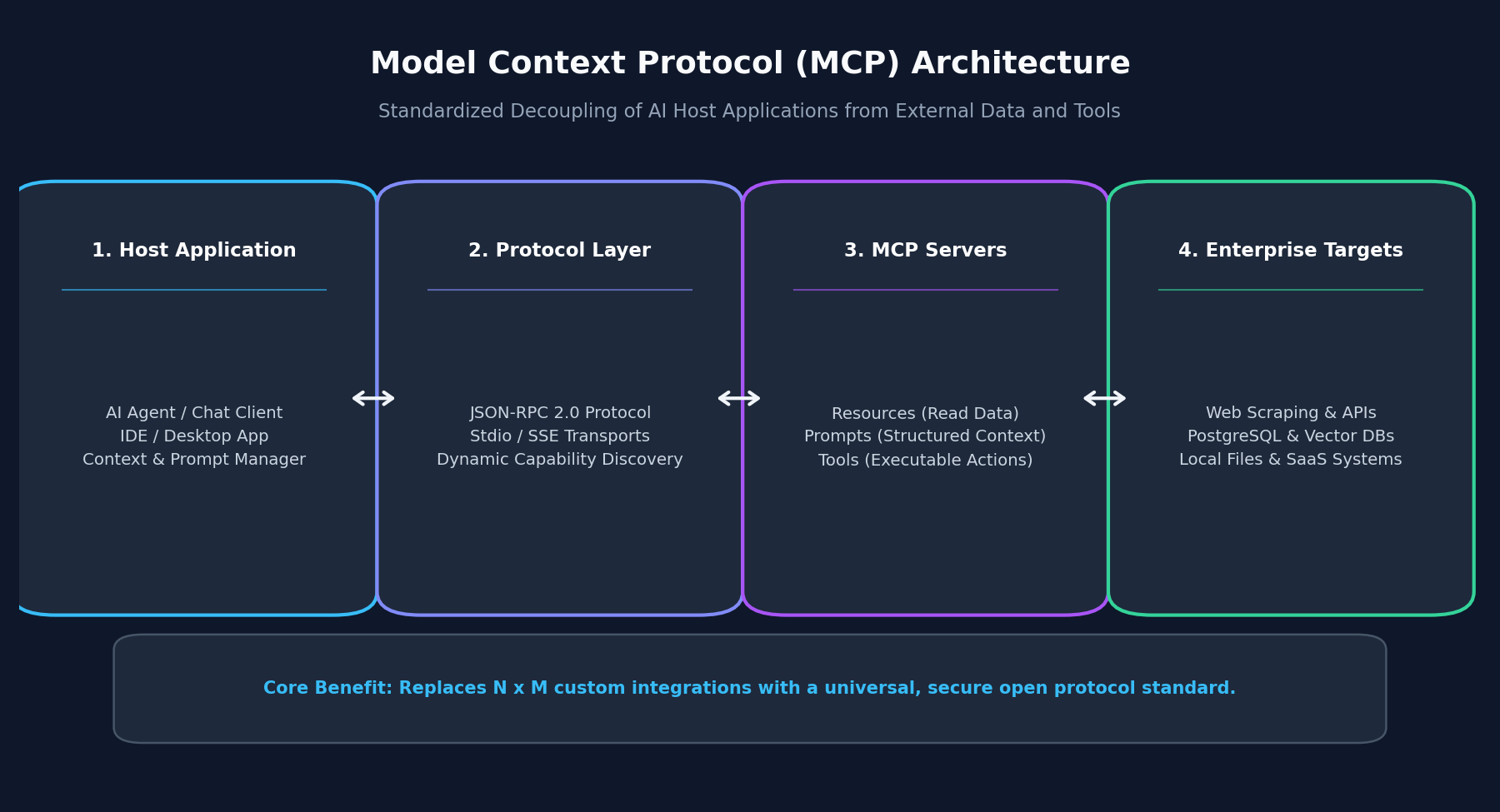
Instead of relying on a single model to perceive, plan, compute, and review in one unbroken generation, a Compound AI System decomposes the workflow across specialized layers:
- Lightweight Semantic Routers: Ultra-fast, cost-effective Small Language Models (SLMs) classify incoming query complexity and route requests to the optimal execution path.
- Specialist Model Ensembles (Mixture-of-Agents): Combining complementary models—such as pairing an ultra-fast coder with a deep reasoning model—where diverse model outputs are synthesized via collaborative aggregation or majority voting.
- Deterministic Symbolic Tools: Delegating deterministic mathematical operations, schema validations, and database queries to external symbolic engines rather than expecting neural probabilistic models to calculate arithmetic.
- Independent Verifier-Optimizer Loops: Introducing dedicated evaluator nodes (LLM-as-a-Judge or programmatic unit test runners) that validate intermediate draft outputs against explicit acceptance criteria before returning results.
Monolithic Models vs. Compound AI Systems
| Architectural Dimension | Monolithic Foundation Model | Compound AI System |
|---|---|---|
| Core Architecture | Single, monolithic LLM prompt call | Multi-component graph (models, tools, verifiers) |
| Task Allocation | One model handles all sub-tasks | Dynamic routing between SLMs and frontier models |
| Error Handling | Monolithic prompt retry or hallucination | Localized self-correcting evaluation loops |
| Inference Cost | Uniformly expensive across all turns | Optimized (80% routed to low-cost SLMs) |
| Deterministic Guarantee | Probabilistic approximation | Strict verification via programmatic schemas |
| Evolvability | Locked to single model provider upgrades | Modular components updated independently |
The Three Foundational Patterns of Compound AI Systems
Production Compound AI architectures consistently rely on three primary design patterns:
- The Dynamic Router Pattern: Classifies queries by intent and difficulty. Trivial tasks (e.g., entity extraction, intent classification) are dispatched to millisecond-tier SLMs, while ambiguous multi-step reasoning is routed to frontier reasoning engines.
- The Mixture-of-Agents (MoA) Layer: Multiple distinct foundation models generate candidate proposals in parallel. A synthesizer model then aggregates the best insights across candidates, consistently outperforming any single model alone.
- The Evaluator-Optimizer (Generator-Verifier) Loop: Separates the generator agent from the critic agent. An evaluator grades draft responses against explicit rubric metrics, triggering targeted refinement passes if standards are unmet.
Implementation: Building a Router-Verifier Compound Pipeline
Let us implement a production-ready Compound AI System in TypeScript. This pipeline demonstrates dynamic tier routing, parallel extraction, and an automated verifier loop.
Step 1: Define Schemas for Routing and Verification
Define explicit data schemas using Zod to govern pipeline decisions:
import { z } from 'zod';

export const TaskComplexitySchema = z.object({
  tier: z.enum(['fast_slm', 'frontier_reasoning']),
  reasoning: z.string(),
  estimatedTokens: z.number(),
});

export const VerificationResultSchema = z.object({
  isValid: z.boolean(),
  accuracyScore: z.number().min(0).max(100),
  feedback: z.string(),
  suggestedCorrections: z.array(z.string()).optional(),
});

export type TaskComplexity = z.infer<typeof TaskComplexitySchema>;
export type VerificationResult = z.infer<typeof VerificationResultSchema>; Step 2: Implement the Lightweight Semantic Router
Deploy an ultra-fast SLM to triage tasks without incurring heavy token costs:
import { generateObject } from 'ai';
import { openai } from '@ai-sdk/openai';
import { TaskComplexitySchema, type TaskComplexity } from './schemas';

export async function routeTaskComplexity(userPrompt: string): Promise<TaskComplexity> {
  const { object } = await generateObject({
    model: openai('gpt-4o-mini'), // Fast, cost-efficient router
    schema: TaskComplexitySchema,
    prompt: `Analyze the complexity of this task:
"${userPrompt}"

Route to 'fast_slm' for direct factual lookup, basic extraction, or formatting.
Route to 'frontier_reasoning' for multi-step logic, edge-case resolution, or deep code architecture.`,
  });

  return object;
} Step 3: Implement the Generator-Verifier Loop
Orchestrate generation followed by an independent critique pass:
import { generateText } from 'ai';
import { VerificationResultSchema, type VerificationResult } from './schemas';

export class CompoundPipeline {
  public async executeCompoundTask(prompt: string): Promise<{ result: string; passes: number }> {
    const route = await routeTaskComplexity(prompt);
    console.log(`[Compound Router] Routed to: ${route.tier} (${route.reasoning})`);

    // Select optimal model based on router decision
    const targetModel = route.tier === 'fast_slm' ? openai('gpt-4o-mini') : openai('gpt-4o');

    let currentDraft = '';
    let isApproved = false;
    let attempts = 0;
    const MAX_ATTEMPTS = 3;

    while (!isApproved && attempts < MAX_ATTEMPTS) {
      attempts++;
      console.log(`[Compound Engine] Generation attempt ${attempts}...`);

      const draftResponse = await generateText({
        model: targetModel,
        prompt:
          attempts === 1
            ? prompt
            : `Original Request: ${prompt}\nPrevious Draft: ${currentDraft}\nImprove based on feedback.`,
      });
      currentDraft = draftResponse.text;

      // Independent Verifier Pass
      const verification = await this.verifyDraft(prompt, currentDraft);
      console.log(
        `[Compound Verifier] Score: ${verification.accuracyScore} | Approved: ${verification.isValid}`,
      );

      if (verification.isValid && verification.accuracyScore >= 85) {
        isApproved = true;
      }
    }

    return { result: currentDraft, passes: attempts };
  }

  private async verifyDraft(originalRequest: string, draft: string): Promise<VerificationResult> {
    const { object } = await generateObject({
      model: openai('gpt-4o'), // High-capability judge model
      schema: VerificationResultSchema,
      prompt: `You are an expert factual auditor. Grade this draft response:
Original Request: "${originalRequest}"
Draft: "${draft}"

Check for factual precision, missing constraints, or logical gaps. Approve if score >= 85.`,
    });

    return object;
  }
} Production Considerations for Compound Systems
When deploying Compound AI Systems across enterprise workloads:
- Latency Budgets and Fallbacks: Parallelize independent model passes and enforce strict timeout bounds on secondary verifier loops.
- Telemetry and Tracing: Implement end-to-end trace observability (capturing routing decisions, individual model latencies, and verifier rejection rates) to pinpoint pipeline bottlenecks.
- Decoupled Model Upgrades: Swap individual component models as new foundation releases emerge without destabilizing overall system architecture.
Conclusion
The future of enterprise artificial intelligence is not monolithic. By structuring workflows as Compound AI Systems—combining dynamic routing, specialized models, symbolic verification, and iterative critique loops—engineering teams build scalable AI software that delivers higher accuracy, predictable latency, and superior cost efficiency.